
Astrophotography
In the summer of 2025, I bought a 1000mm f/3.9 10-inch mirror Newtonian Telescope. My previous Newtonian had a mirror less than half that size, and it was 45 years earlier, but I never forgot the amazement and awe of looking up into the heavens, and have always wanted to try astronomy again. Now, as a professional photographer, I thought I’d be well-equipped technically to dig in and start making some photos of the night sky, and the nebulae I could barely see 45 years earlier.
My knowledge of light and exposure, and of course, grappling with complicated equipment, stood me in good stead, but I estimated the learning curve ahead of me to be around 5% of the actual curve I had to climb to even start and make my first rudimentary photographs. There was probably almost as steep a second curve after that to enable me to really make images I am happy with.
On this page I’m going to share some of my better images, and gradually build out this resource to cover my gear and some of the most important things I’ve learned and will continue to learn as I progress along this wonderful journey.
The Orion Nebula holds a special place in my heart. I remember learning the shape of the constellation, with the three stars of Orion’s belt in a perfect row, with the two stars at the bottom of his robe and two more on his shoulders, creating that unmistakable, familiar shape. And of course, the bright star, which is often depicted as a flash of light on the metal sword, is the Orion Nebula. Locating this in the night sky, and on a very clear night, being able to see a faint green cloud through my first telescope as a young teenager, is something that will never leave me.
I’d been fascinated by space and cosmos since I was a small boy. I made a rocket ship out of a washing machine box and filled it with egg-box switches and control panels, and while inside, living out my dreams, I would often turn on an old, broken radio and twiddle the knobs to make a scratchy static noise, and pretend I was trying to contact our base in vain. Being able to transport myself to those places thousands of light-years away was nothing short of a miracle, and I have longed to get back there for 45-years since.
The Truth of Color
One other thing I should add before we go on, is that to the nake eye, under relatively light-polluted skies, the Orion Nebula does appear as a greenish cloud, so if you are wondering why the background photo of Orion is red, it’s because of the filters used to capture the night sky. Is it not a faithful representation? Well, yes and no. We see the world around us because of the way our eyes are biologically formed. Some animals only see black and white, but that does not make the color we see a lie.
I currently use the following filters for the following reasons.
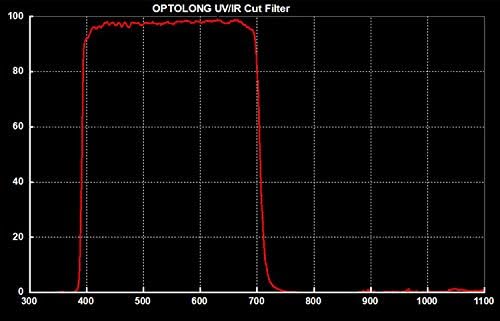
Optolong UV/IR Cut: This blocks all light except light of a wavelength between 390 and 710 nm.
Reason: Currently, I have a 5-filter wheel in my image train, so I use this filter for initial focusing, but for astrophotography, the main use for this filter is for photographing the moon, and it has limited usefulness for photographing galaxies. The human visible light spectrum typically ranges from approximately 380 to 750 or 780 nanometers (nm), slightly wider than this filter range. However, our cameras capture more wavelengths than this, which can negatively affect the results in our photographs.
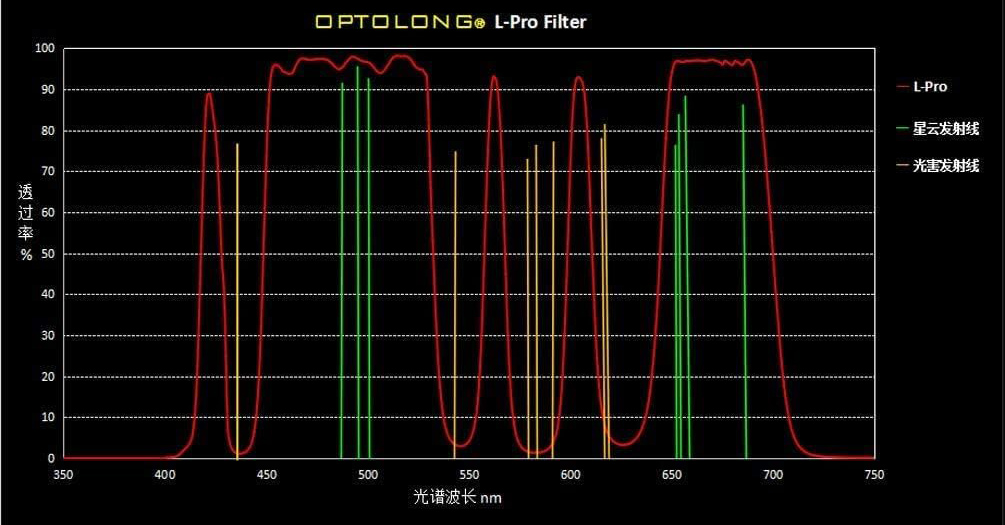
Optolong L-Pro: This filter allows the following light wavelengths through – OIII(496nm&500nm), Hβ(486nm), NII(654nm&658nm), Ha(656nm), SII(672nm), and blocks the following light pollution ranges – Na(589nm/616nm), Hg(435nm/578nm).
Reason: This filter is great for cutting through light pollution. I live in a Bortel 5 area, which is halfway between very good and very bad on the light pollution scale. Some celestial bodies are simply not possible to shoot here, but some are possible with these filters.
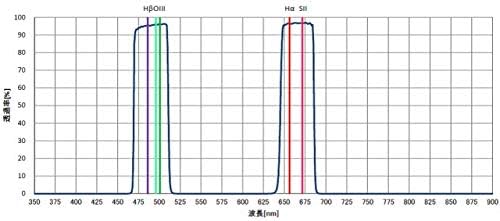
Sightron Japan Quad BP: This filter is sensitive only to the following four light wavelengths: Hα, Hβ, OIII, SII
Reason: Many nebulae are made up of light between the wavelengths 460 to 520 nm, and 640 to 685 nm, so this filter is a good first choice for a wider color range in nebulae, although I often create nebulae images using both this and the following filter, which I merge together.
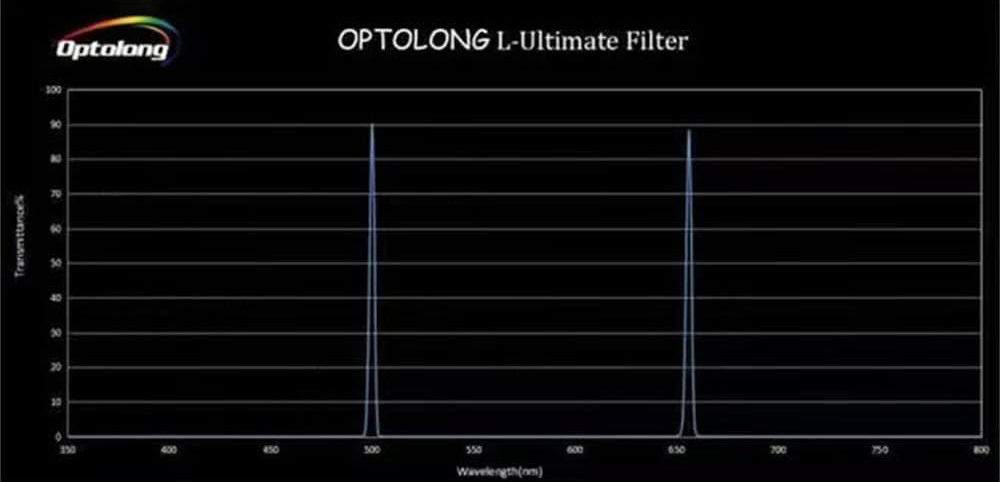
Optolong L-Ultimate: This filter is sensitive just 3nm, a very narrow bandwidth of both OIII and Hα light wavelengths
Reason: The Orion and Rosette nebulae shots displayed here are a merge of both Quad BP and L-Ultimate filter images, where the L-Ultimate is used more as an accent or highlight to augment the broader range of light in the Quad BP images. The Horse Head Nebula shot was made only with the L-Ultimate filter, meaning the light you see if mostly Hydrogen alpha (Hα), which is red, and a splash of doubly ionized oxygen (OIII or O2+) which is a teal or blue color.
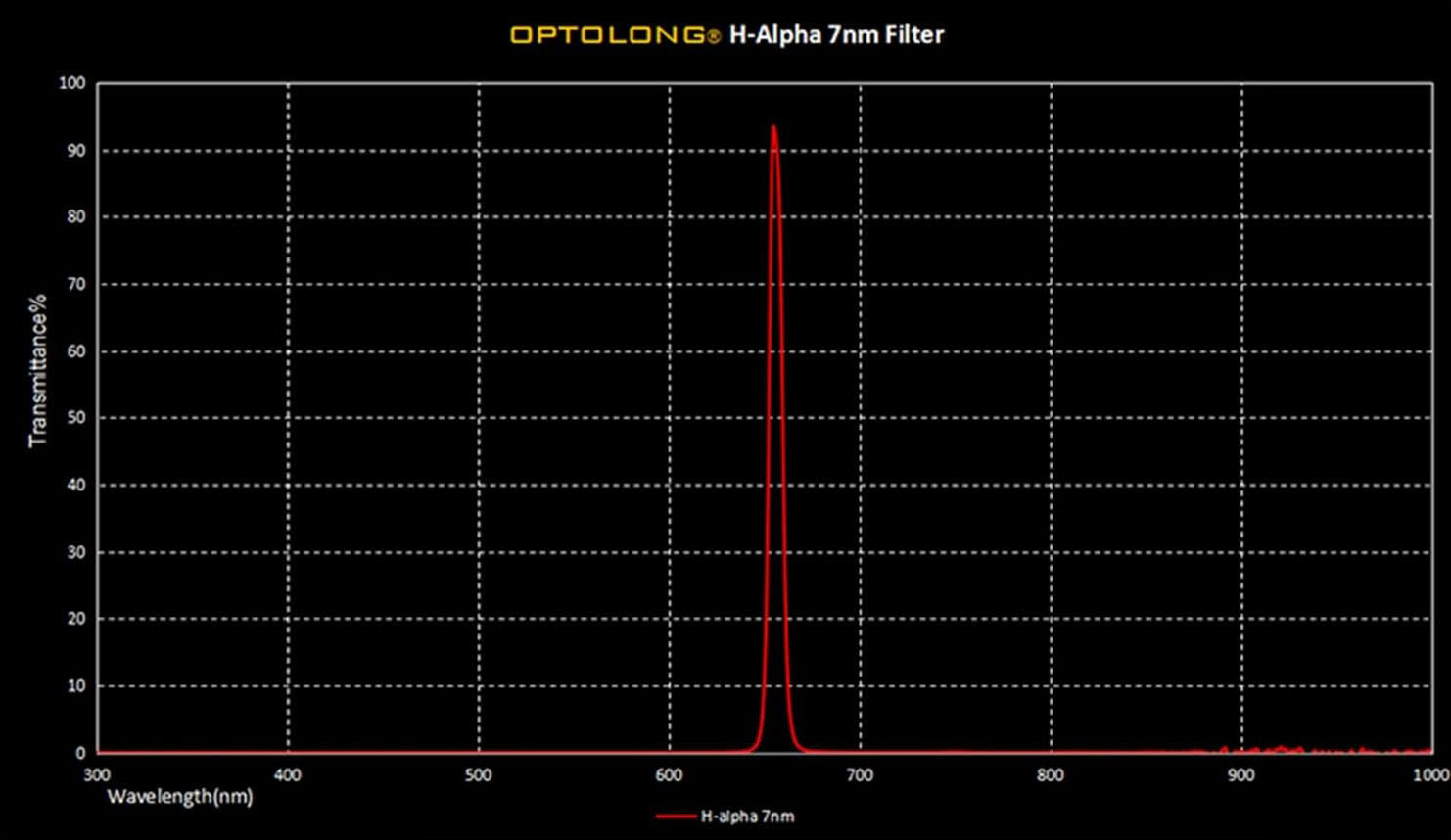
Optolong H-Alpha: This filter is sensitive 7nm of Hydrogen alpha (Hα) light wavelength
Reason: I bought this filter mainly to capture the sun (with a very heavy neutral density filter on the front of my telescope tube too) but with my Canon EOS R5 it really still wasn’t possible. I probably need a dedicated solar telescope, but I will also try once more at some point using the ZWO ASI6200MC camera, to see if I can pull any more detail out of the sun with that. I also use this sometimes for highlights when shooting nebulae, but not often. If I cannot make it work for the sun, I will possibly remove this filter later.
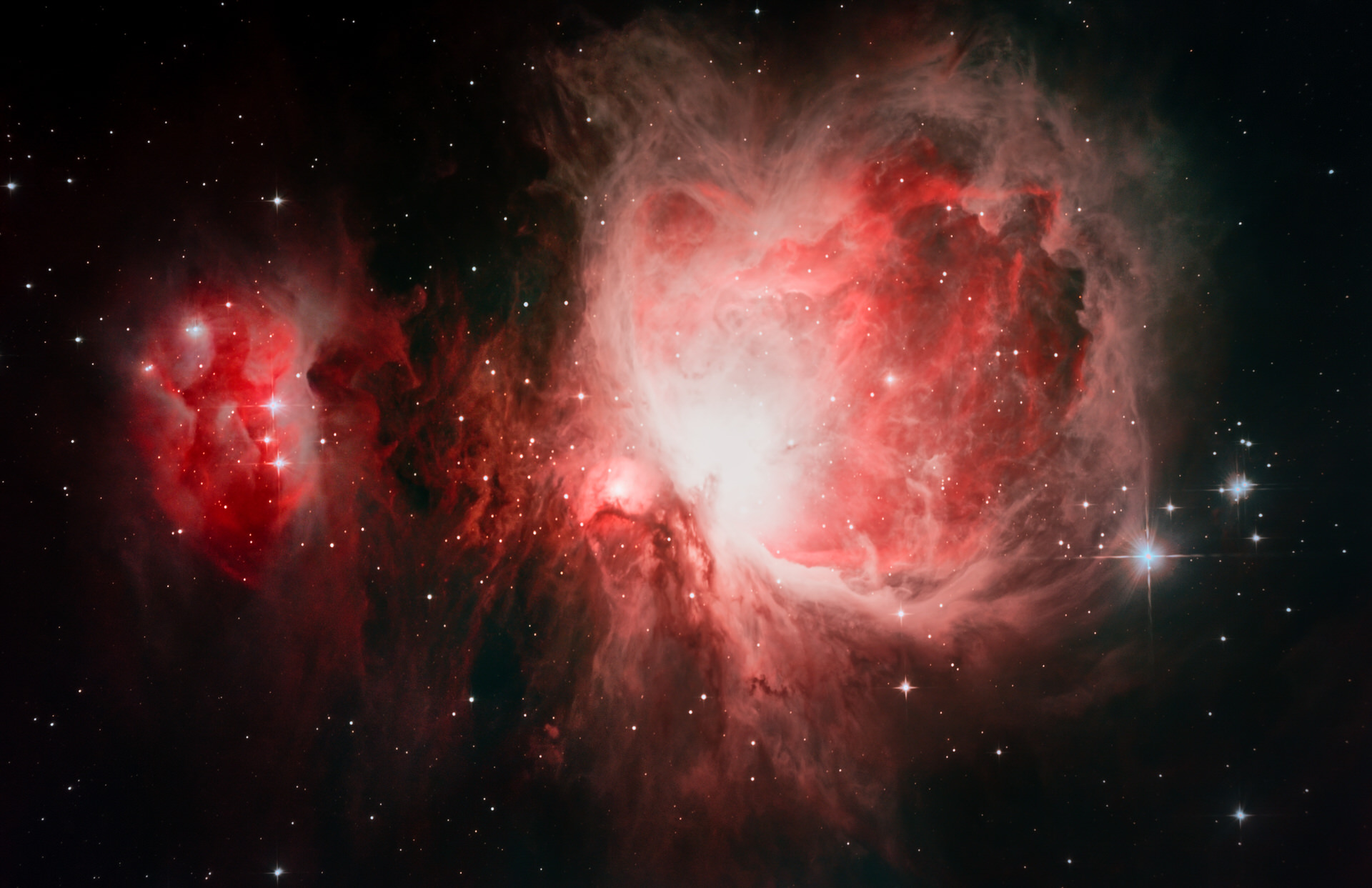
The Orion Nebula
The Orion Nebula (M42) is located approximately 1,344 to 1,500 light-years away from Earth. As the closest region of massive star formation to our solar system, it is visible to the naked eye in the constellation Orion. It is about 25 light-years across.
Catalog # M 42, Date: Dec 9, 2025
Integration: 31 x 300 sec (2hr 35min) L-Ultimate + 23 x 300 sec (1hr 55min) Quad BP
Sky Watcher Quattro 250P Newtonian Telescope with Canon EOS R5 camera
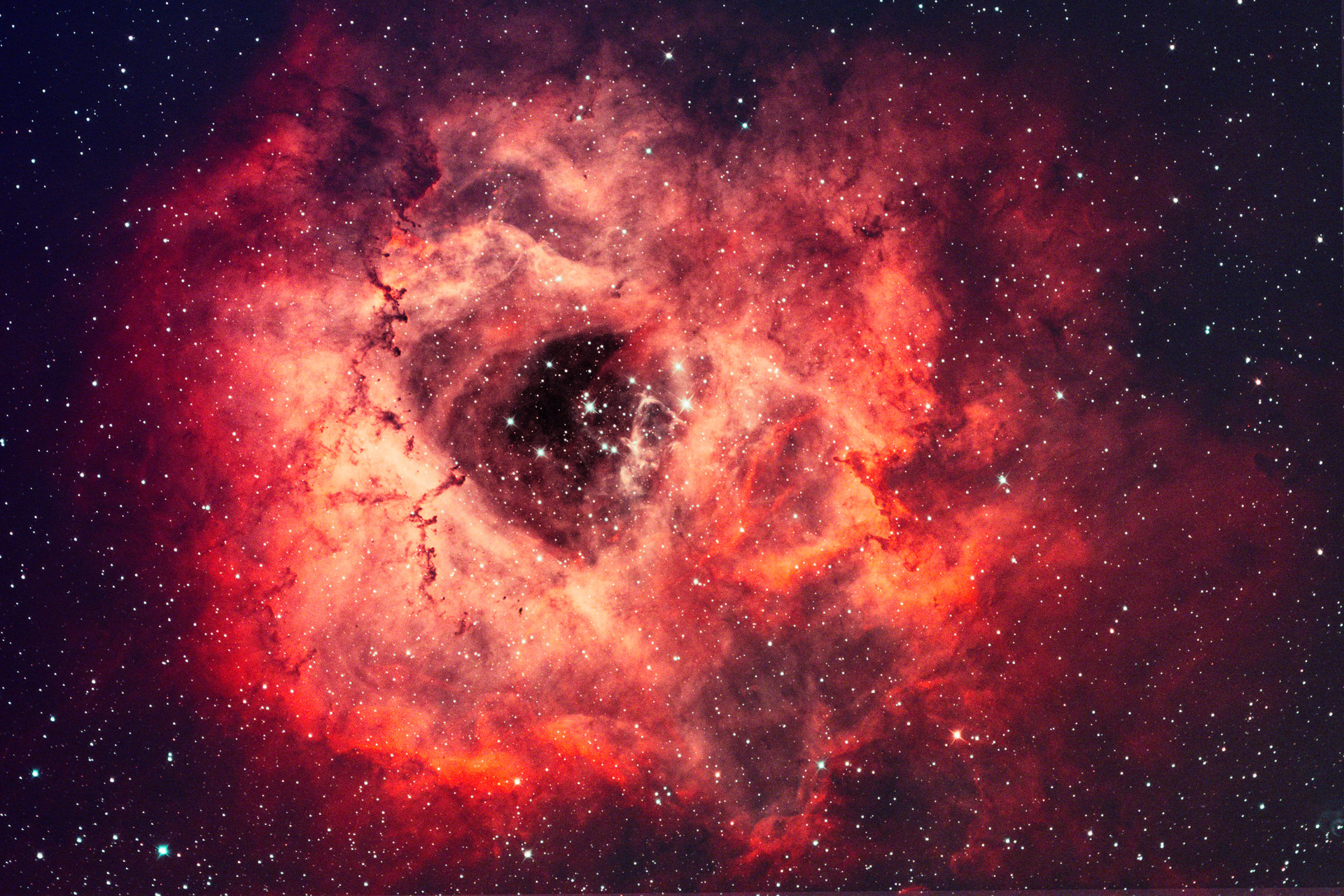
The Rosette Nebula
The Rosette Nebula is located approximately 5,000 to 5,200 light-years away from Earth in the constellation Monoceros. It is a massive star-forming region spanning about 100 to 130 light-years in diameter, associated with the young open cluster NGC 2244
Integration: 27 x 420 sec (3hr 9min) Quad BP + 6 x 600 sec (1hr) L-Ultimate
Sky Watcher Quattro 250P Newtonian Telescope with ZWO ASI6200MC camera
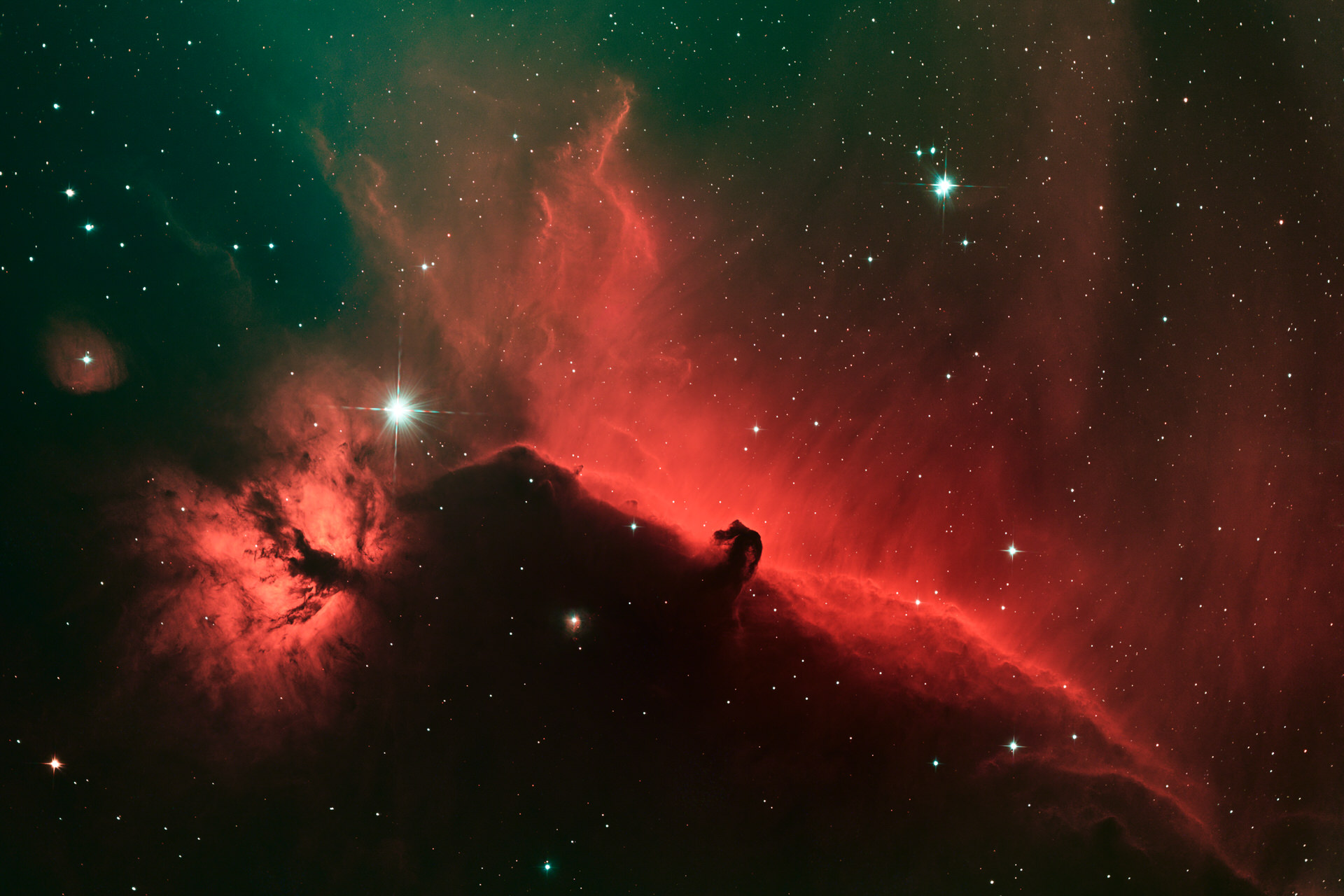
The Horse Head Nebula
Catalog # M 42, Date: Jan 21, 2026
Integration: 25 x 420 sec (2hr 55min) L-Ultimate
Sky Watcher Quattro 250P Newtonian Telescope with ZWO ASI6200MC camera
Stay tuned for more astrophotography content as time allows.